
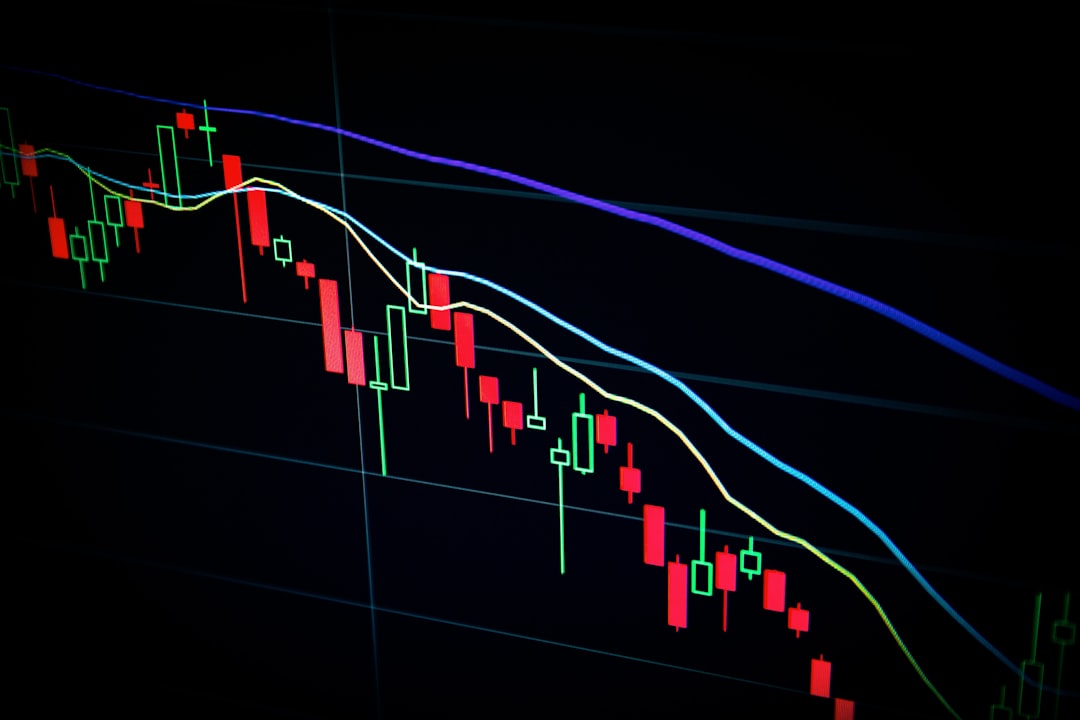
Ninety-five percent of retail forex traders lose money. For Iranian traders, that statistic becomes even grimmer when compounded by international sanctions, banking restrictions, and a Rial that has depreciated over 600% since 2018. Poor risk management is the primary killer—not market unpredictability or lack of strategy. This guide provides concrete, actionable risk management practices tailored specifically to the realities Iranian traders face: limited broker access, cryptocurrency payment dependencies, VPN requirements, and regulatory isolation. Proper position sizing, leverage discipline, stop-loss strategies, and broker selection can transform forex from a gamble into calculated risk-taking. The practices outlined here aren’t theoretical—they’re survival tools that can place you among the 5% who endure.
Understanding the Unique Risk Landscape for Iranian Traders
Iranian forex traders operate in what amounts to a double-jeopardy environment. While retail traders worldwide face the inherent risks of leveraged currency speculation, Iranian participants confront an additional layer of structural vulnerabilities that fundamentally alter the risk equation. The combination of geopolitical isolation, extreme currency instability, and absence of regulatory recourse creates conditions where standard risk management approaches prove insufficient.
Sanctions and Market Access Challenges
International sanctions targeting Iran’s financial sector have severed access to conventional banking infrastructure. Iranian traders cannot wire funds through SWIFT, cannot hold accounts with most international brokers, and find themselves excluded from regulated markets in Europe, the United States, and Australia. This forces reliance on offshore brokers operating in jurisdictions with minimal oversight—often Seychelles, St. Vincent and the Grenadines, or Vanuatu—where client protection mechanisms are weak or nonexistent.
The payment barrier introduces cryptocurrency as the primary transaction medium. While digital currencies enable deposits and withdrawals, they add exchange rate volatility on both ends of each transaction. A trader depositing funds must first convert Rials to Bitcoin or Tether, then convert again to USD account balance. Withdrawals reverse this process. Each conversion carries spread costs and timing risk, potentially eroding 3-5% of capital before a single trade executes.
VPN dependency creates additional fragility. Access to trading platforms requires circumventing government internet restrictions, introducing connection instability and potential account security vulnerabilities that traders in unrestricted markets never consider.
Currency Volatility and Capital Preservation
The Iranian Rial’s catastrophic depreciation—over 600% against the dollar between 2018 and 2023—transforms capital preservation from theoretical concern to existential necessity. When the local currency loses two-thirds of its purchasing power in five years, maintaining dollar-denominated trading capital becomes as critical as generating trading profits. A trader who breaks even in dollar terms but holds proceeds in Rials faces guaranteed purchasing power destruction.
This reality creates asymmetric pressure. Iranian traders cannot afford the gradual account erosion that might be acceptable elsewhere. Without regulatory protection or legal recourse against broker disputes, every dollar lost represents irreplaceable capital in an environment where replenishment through traditional banking channels remains impossible.
The 1-2% Rule: Position Sizing for Capital Preservation
Trading with more than 2% of your capital on a single position is one of the fastest ways to blow up your account. Research shows that traders who limit their risk to 1% per trade have a 70% higher survival rate after one year compared to those risking 5% or more per position. This rule becomes even more critical for Iranian traders managing accounts in a currency that has lost over 600% of its value against the USD since 2018.
The principle is straightforward: no single trade should expose more than 1-2% of your total trading capital to loss. If you have a $1,000 account, your maximum risk per trade should be $10-$20. This buffer allows you to withstand a series of losing trades without devastating your account. With a 1% risk model, you could theoretically survive 100 consecutive losses before your account reaches zero—though statistically, you should start winning long before that point.
Calculating Your Position Size
Position sizing requires three inputs: your account balance, your risk percentage, and your stop-loss distance in pips. Here’s the calculation process:
- Determine your risk amount: Multiply your account balance by your chosen risk percentage (1% or 2%)
- Measure your stop-loss distance: Calculate the difference in pips between your entry price and stop-loss level
- Calculate position size: Divide your risk amount by the stop-loss distance (converted to dollars per pip)
For example, with a $2,000 account risking 1% ($20) and a 50-pip stop-loss on EUR/USD, your position size would be 0.04 lots (4,000 units), where each pip equals approximately $0.40.
Adjusting for Rial-Based Accounts
Iranian traders funding accounts through cryptocurrency conversions face additional complexity. When your funding currency fluctuates dramatically, recalculate your position sizes weekly based on the current IRR/USD exchange rate. During periods of high Rial volatility or major geopolitical events affecting sanctions, consider reducing your risk to 0.5% per trade until market conditions stabilize. This conservative approach protects against the compounding effect of both trading losses and currency depreciation.
Leverage Management: Avoiding the Margin Call Trap
Many offshore brokers targeting Iranian traders advertise leverage ratios of 1:500, 1:1000, or even higher. These numbers sound appealing, but they represent one of the fastest paths to account destruction. High leverage doesn’t increase profit potential—it magnifies losses at the exact same rate it amplifies gains.
Consider a practical example: With 1:500 leverage, a trader with $1,000 can control a position worth $500,000. A mere 0.2% adverse price movement wipes out the entire account. During volatile periods—particularly common when trading USD pairs as an Iranian trader exposed to geopolitical events—spreads widen and prices can move several percentage points within minutes. What seems like an opportunity for massive profits becomes a guaranteed margin call.
Professional traders and institutional accounts rarely exceed 1:30 leverage, and many operate comfortably between 1:10 and 1:20. For Iranian traders facing additional challenges like limited deposit options through cryptocurrency channels and the complexity of moving funds in and out of accounts, conservative leverage becomes even more critical. Losing an account doesn’t just mean a trading loss—it means navigating the entire withdrawal and redeposit process again, often involving multiple transaction fees and exchange rate spreads.
The mathematics are straightforward: at 1:30 leverage, your account can withstand a 3.3% adverse movement before facing margin call territory. At 1:500 leverage, you’re liquidated at just 0.2%. The difference between sustainable trading and rapid account depletion lies in this margin of safety.
Brokers offer extreme leverage because it generates transaction volume and increases the likelihood of trader losses. Their business model profits from turnover, not your success. Iranian traders should ignore marketing claims and self-impose maximum leverage limits of 1:30 to 1:50, regardless of what the broker permits. This discipline separates traders who survive market volatility from those who repeatedly fund and lose accounts.
Stop-Loss Strategies and Risk-to-Reward Ratios
Every trade without a stop-loss is a gamble, not a calculated position. For Iranian traders managing capital in an environment where currency volatility and limited withdrawal options already create heightened risk, stop-loss orders serve as the essential safety mechanism that separates disciplined trading from account destruction.
Setting Effective Stop-Loss Levels
Stop-loss placement should reflect market structure, not arbitrary percentages or round numbers. The most reliable approach uses technical analysis to identify logical invalidation points:
- Support and resistance levels: Place stops 5-10 pips beyond key levels to account for false breakouts
- Swing highs and lows: For long positions, set stops below the most recent swing low; for shorts, above the recent swing high
- Volatility-based stops: Use Average True Range (ATR) to set stops at 1.5x to 2x the ATR value, adjusting for current market conditions
- Chart pattern invalidation: Position stops where the pattern (head and shoulders, triangle, flag) would be technically broken
Iranian traders using cryptocurrency deposits should factor in the time required for fund transfers when calculating position size. A stop-loss at 2% of account equity means little if you cannot quickly replenish capital due to payment processing delays.
Calculating Risk-to-Reward Before Entry
Never enter a trade without knowing your potential reward relative to your risk. A minimum 1:2 risk-to-reward ratio means targeting profits at least twice the distance of your stop-loss. In volatile emerging market conditions common to traders operating from Iran, aim for 1:3 ratios to account for execution slippage and unexpected spread widening during low liquidity periods.
Calculate this before clicking the buy or sell button. If your stop-loss sits 30 pips from entry, your take-profit target should be at least 60 pips away at a clearly defined technical level. If no such level exists, the trade setup is questionable.
The most dangerous habit: moving or removing stop-losses after entering a position. Market conditions that triggered your original stop placement haven’t changed because price moved against you. Respect your original analysis or accept that emotional trading will eventually drain your account.
Diversification and Correlation Management
Many Iranian traders unknowingly double their risk by opening multiple positions they believe are diverse, only to discover they’re essentially betting on the same market movement. A trader holding long positions in EUR/USD, GBP/USD, and AUD/USD might think they’ve spread risk across three different opportunities, but when the dollar strengthens, all three positions typically move against them simultaneously.
Understanding currency correlation is fundamental to genuine diversification. Currency pairs with correlations above +0.70 tend to move in the same direction, while those below -0.70 generally move oppositely. For example, EUR/USD and GBP/USD typically maintain a correlation around +0.85, meaning they move together roughly 85% of the time. Meanwhile, EUR/USD and USD/CHF often show negative correlation near -0.80, moving in opposite directions.
For Iranian traders working with limited capital due to payment restrictions and cryptocurrency conversion costs, avoiding correlated positions becomes even more critical. Instead of opening three positions that essentially represent one bet, consider spreading exposure across genuinely different market drivers:
- Major pairs (EUR/USD, USD/JPY) for liquidity and tight spreads
- Commodity currencies (AUD/USD, NZD/USD, USD/CAD) influenced by resource prices
- Safe-haven pairs (USD/CHF, USD/JPY) that behave differently during market stress
Limit simultaneous positions to no more than three to four trades, ensuring no single currency appears in more than two positions. If you’re long EUR/USD and short USD/JPY, you’re already exposed to USD movement from both directions. Adding GBP/USD creates triple USD exposure, concentrating risk rather than diversifying it. Iranian traders facing the additional challenge of IRR volatility and limited broker access cannot afford this hidden concentration risk that can wipe out accounts during unexpected market moves.
Essential Broker Features for Risk Protection
Iranian traders operate without the safety net of domestic regulatory oversight, making broker selection a matter of financial survival rather than mere preference. When local authorities cannot intervene on your behalf and international legal recourse remains virtually impossible, the broker’s built-in protections become your only shield against catastrophic losses.
Why Negative Balance Protection Matters
Negative balance protection prevents your account from dropping below zero during extreme volatility. Without this feature, traders can owe money to brokers—a particularly dangerous scenario for Iranians who lack legal frameworks to dispute such debts. During the 2015 Swiss Franc crisis, traders without this protection faced losses exceeding their deposits by 200-500%. For Iranian traders already managing currency depreciation and limited capital access, owing money in hard currency represents an unacceptable risk.
Beyond this fundamental protection, three features separate viable brokers from unsuitable ones:
- VPN compatibility and platform accessibility through multiple connection methods, including mobile apps that function reliably with Iranian IP masking
- Cryptocurrency deposit and withdrawal support for Bitcoin, Tether (USDT), or Ethereum to bypass SWIFT restrictions
- Segregated client accounts that keep your funds separate from broker operating capital, reducing exposure if the broker faces financial difficulties
Verifying Broker Risk Features
| Broker Feature | Why It Matters for Iranian Traders | How to Verify |
|---|---|---|
| Negative Balance Protection | Prevents debt beyond deposit; critical without legal recourse | Check account terms; test with demo account documentation |
| Crypto Payments | Only reliable funding method given banking sanctions | Attempt small test deposit; confirm withdrawal processing time |
| VPN Tolerance | Essential for platform access from Iran | Contact support directly; check trader forums for Iran-specific reports |
| Segregated Accounts | Protects funds if broker becomes insolvent | Review regulatory disclosures; verify tier-1 jurisdiction license |
Before committing significant capital, conduct a small deposit-to-withdrawal cycle using cryptocurrency. The broker’s response to this test—processing speed, fees, and support quality—reveals more about their reliability than marketing materials ever will. Iranian traders who skip this verification step often discover problems only when attempting to withdraw profits, at which point recovery options become extremely limited.
Psychological Discipline and Trading Journals
Emotional trading increases losses by approximately 40% compared to disciplined, rule-based approaches. For Iranian traders operating in an already challenging environment—dealing with VPN connections, cryptocurrency payment delays, and currency volatility—emotional decision-making compounds existing risks and accelerates account depletion.
Recognizing Emotional Trading Patterns
The most destructive psychological pattern is revenge trading: attempting to recover losses through increasingly aggressive positions. After a losing streak, many Iranian traders feel pressure to quickly rebuild their capital, particularly given the Rial’s ongoing depreciation against the dollar. This urgency leads to overleveraging, ignoring stop-losses, and abandoning established risk parameters.
Common emotional triggers include:
- Fear of missing out (FOMO) when seeing rapid market movements
- Overconfidence after several consecutive winning trades
- Desperation when facing mounting losses in Rial terms
- Frustration with technical issues like platform disconnections or delayed withdrawals
Building an Effective Trading Journal
A detailed trading journal transforms subjective emotions into objective data. Iranian traders should record each trade with specific metrics: entry and exit prices, position size as a percentage of capital, the rationale for entering, emotional state during execution, and outcome in both dollar and Rial terms.
Your journal should capture:
- Pre-trade analysis and setup identification
- Risk-reward ratio before entering the position
- Whether you followed your trading plan precisely
- Market conditions and relevant news events
- Post-trade analysis of what worked or failed
Review your journal weekly to identify recurring mistakes. If you consistently lose on Friday trades, perhaps market uncertainty before the weekend affects your judgment. If losses cluster around specific currency pairs, you may lack sufficient understanding of those markets. This pattern recognition—impossible without systematic record-keeping—allows you to eliminate costly mistakes before they devastate your account.
Practical Risk Management Checklist for Iranian Traders
A systematic checklist prevents emotional trading decisions and protects capital during volatile market conditions—critical considerations for Iranian traders navigating sanctions-related challenges and Rial depreciation.
Pre-Trade Verification
Before entering any position, complete these essential checks:
- Position Size Calculation: Calculate your position size based on account balance in USD or cryptocurrency equivalent, not Rial value. With the Rial losing over 600% against the USD since 2018, always work in stable currency units. Risk no more than 1% of your account per trade.
- Stop-Loss Placement: Set your stop-loss order immediately when opening the position. Place it at a logical technical level (support/resistance, not arbitrary distance). Iranian traders should account for wider spreads during low liquidity hours when using offshore brokers.
- Risk-Reward Verification: Confirm minimum 1:2 risk-reward ratio before executing. If risking $50, potential profit must be at least $100. Skip trades that don’t meet this threshold.
- VPN Connection Check: Verify your VPN is active and stable. Connection drops can prevent you from managing open positions during critical moments.
Daily and Weekly Monitoring
Track these metrics consistently:
- Daily drawdown limit (stop trading if you lose 3% of account in one day)
- Weekly maximum loss threshold (5% account drawdown triggers full trading pause)
- Open position exposure (never exceed 3% total account risk across all positions)
- Broker platform accessibility (test login and execution speed before market volatility)
Iranian traders face extraordinary challenges that would overwhelm most retail forex participants. International sanctions, banking restrictions, Rial depreciation exceeding 600%, and regulatory isolation create a trading environment where proper risk management separates survival from financial catastrophe. The practices outlined in this guide—limiting risk to 1-2% per trade, capping leverage at 1:30 to 1:50, always using stop-losses, selecting brokers with negative balance protection, and maintaining detailed trading journals—transform forex from gambling into calculated risk-taking.
These principles aren’t restrictive constraints but liberating frameworks. They allow you to survive inevitable drawdowns, protect irreplaceable capital in an environment where replenishment remains difficult, and compound gains over time rather than cycling through repeated account destruction. While 95% of retail traders fail, disciplined risk management places Iranian traders among the surviving 5%.
Start with one practice rather than attempting everything simultaneously. Master position sizing this week. Add consistent stop-loss placement next week. Gradually build the systematic approach that professional traders use to navigate markets sustainably. The path from the 95% who lose to the 5% who endure begins with a single disciplined decision.