
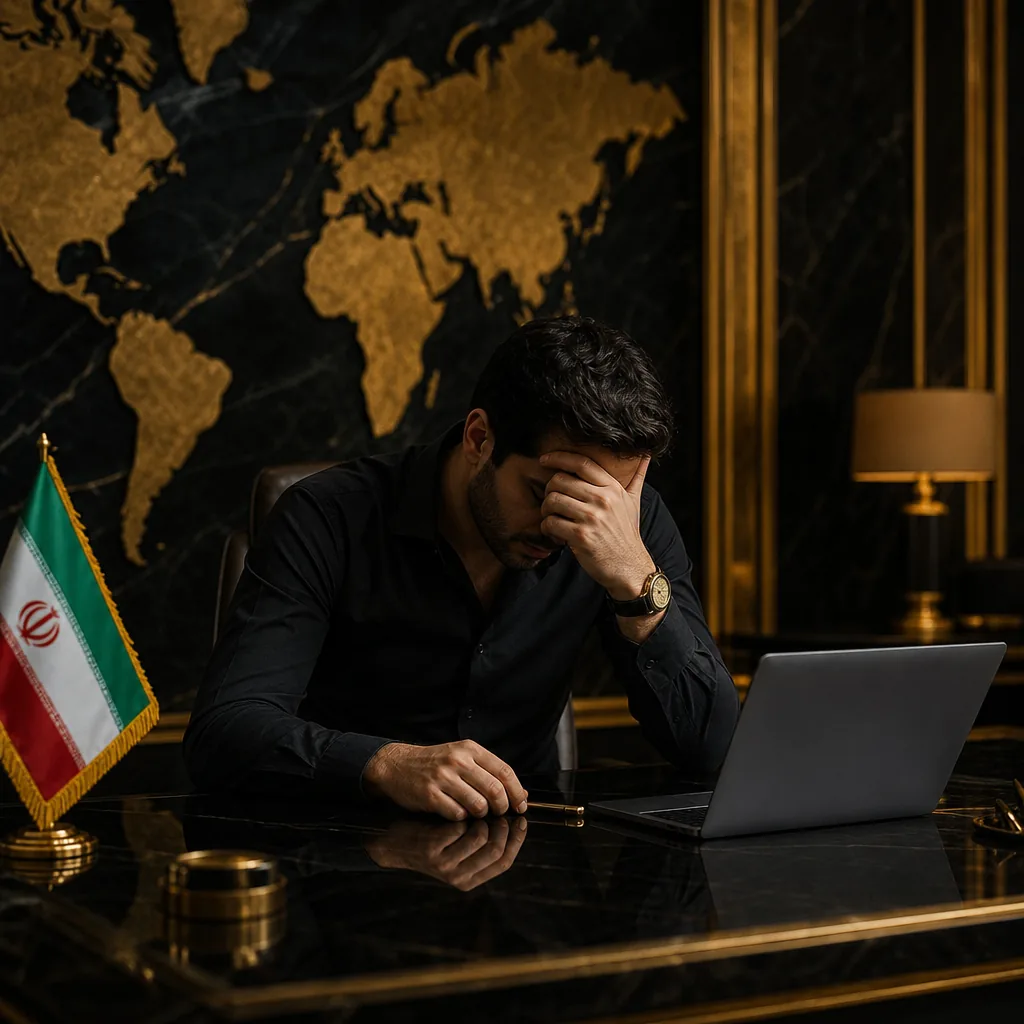
The single biggest reason traders fail isn’t bad luck or market conditions: it’s the absence of a written trading plan. Without one, you’re reacting to price movements with hope and fear instead of executing a tested system. For Iranian traders, the problem compounds. Sanctions block access to major brokers, payment methods fail without warning, and educational resources ignore the realities of trading through VPNs and offshore platforms.
The Harsh Reality: Why 70-90% of Forex Traders Lose Money
Most retail Forex traders lose money. This isn’t marketing hyperbole or a scare tactic. It’s a documented pattern across brokers, markets, and time periods. A 2019 academic study found that only 1% of day traders earn predictable positive returns after accounting for fees. The European Securities and Markets Authority reported that between 74-89% of retail investor accounts lose money when trading CFDs and Forex with major brokers.
The primary culprit? Lack of a structured trading plan. Traders enter the market with capital and ambition but no systematic approach to decision-making, risk management, or performance evaluation. They react to price movements emotionally, chase losses, and abandon discipline the moment a trade goes against them.
Global Statistics on Trader Failure
The failure rate is remarkably consistent across geographies and asset classes. Most retail traders blow through their first account within six months. The pattern repeats: initial wins create overconfidence, position sizes grow recklessly, and a string of losses wipes out the account. Without a written plan specifying entry criteria, exit rules, and risk limits, traders make decisions based on hope, fear, or the last headline they read.
Even traders who survive the first year rarely achieve consistent profitability. The 1% figure from the 2019 study reflects those who can reliably generate positive returns over time, not just occasional winning months. The gap between occasional success and sustainable profitability is where most traders fall.
Additional Challenges for Iranian Traders
Iranian traders face the same psychological and technical hurdles as their global counterparts, plus a layer of structural obstacles that compound the difficulty. Sanctions restrict access to major international brokers, forcing reliance on offshore platforms with variable reliability and limited regulatory oversight. Payment methods are convoluted. Credit cards and standard bank transfers don’t work, so traders turn to cryptocurrency deposits or third-party payment processors that add cost and complexity.
Educational resources tailored to Iranian market conditions are scarce. Most Forex education assumes access to tools, brokers, and financial infrastructure that Iranian traders can’t use. Learning to trade is already hard. Learning while navigating workarounds for every basic function makes it harder still.
These compounded challenges don’t excuse poor planning, they make planning more critical. A trader without a plan in New York will probably fail. A trader without a plan in Tehran, dealing with broker limitations and payment friction, has almost no chance.
What a Proper Trading Plan Actually Contains

A proper trading plan is a written document that specifies exactly when you’ll enter a trade, when you’ll exit, and how much you’re willing to lose. Without these specifics, you’re gambling with a currency pair ticker in front of you.
Core Components Every Plan Needs
Start with your entry and exit rules. Define precise conditions: for instance, “I enter EUR/USD long only when the 50-period moving average crosses above the 200-period MA on the 4-hour chart, RSI is below 70, and price is above the daily pivot point.” Your exit criteria should be equally concrete, covering both profit targets (say, 2:1 reward-to-risk ratio) and stop-loss placement (below the most recent swing low, or 30 pips, whichever is tighter).
Risk management parameters form the backbone. The standard advice is to risk no more than 1-2% of your total capital per trade. If you have $1,000 in your account, that’s $10 to $20 per position. Traders who risk more than 2% per trade have a 40% higher failure rate, according to 2022 data from Myfxbook. Calculate your position size before you click buy or sell.
Set clear trading objectives and benchmarks. Instead of “make money,” aim for measurable targets: 5% monthly return, a win rate above 55%, or an average risk-to-reward ratio of 1:2.5. Track these weekly.
Your market analysis methodology matters. Will you rely on technical indicators, follow economic news releases, or combine both? Decide now, and stick to it for at least three months before adjusting.
Define your time commitment and schedule. If you work full-time, you can’t day-trade the London session from Tehran. Choose pairs and timeframes that fit your availability.
Finally, list the market conditions where you stay out. No trading during major news if you use tight stops. No positions over weekends if you can’t monitor them. No entries when volatility drops below a certain ATR threshold.
Iran-Specific Considerations
Include backup broker accounts and deposit methods in your plan. If your primary broker loses payment processor access, you need alternatives ready. Document which cryptocurrencies or e-wallets you’ll use, and keep minimum balances in each.
Plan around internet disruptions. If connectivity drops during a trade, know your broker’s phone number for emergency closes. Set automatic stop-losses on every position before sanctions-related outages force you offline.
The Emotional Trap: How Fear and Greed Destroy Trading Accounts
Emotional trading decisions account for approximately 80% of trading losses among retail traders, according to research on trading psychology. Two forces drive most of these failures: fear and greed. Fear freezes traders when they should act and panics them into closing profitable positions too early. Greed does the opposite, convincing them to hold losing trades far too long or to risk money they can’t afford to lose.
The Psychology of Losing Traders
When a trade moves against you, the brain treats the unrealized loss as physical pain. This triggers a desperate need to “fix” the situation immediately. The result is revenge trading, where you place impulsive, oversized trades to recover what you just lost. Each loss intensifies the emotional spiral. You abandon your entry rules, ignore your stop-losses, and chase the market with increasingly reckless positions.
Overtrading follows the same pattern. Without a written plan, you convince yourself that every price movement is an opportunity. This behavior chips away at your returns. You rack up spreads, commissions pile up, and your account bleeds through a thousand small cuts.
Using Your Plan as an Emotional Shield
A written trading plan breaks this cycle by creating distance between impulse and action. When you feel the urge to double your position size after three losing trades, the plan reminds you that your maximum risk per trade is 2 percent. When you want to chase a breakout without confirming your setup, the plan says no entry without your three criteria.
For Iranian traders working through VPNs and offshore brokers, this discipline matters even more. You face connection delays, currency conversion costs, and limited recourse if something goes wrong. Every emotional mistake costs you more than it would cost a trader with direct market access. The plan becomes your anchor when technical problems or geopolitical news tempts you to abandon your strategy. Write down your rules, print them, and check them before every trade.
Position Sizing and Risk Management: Your Account’s Survival Mechanism

A single overleveraged trade can wipe out weeks of careful gains. For Iranian traders who face complicated deposit processes and limited withdrawal options, recovering from an account blow-up means starting over with fresh capital that may take months to transfer. Position sizing turns trading from gambling into a repeatable process where you control exactly how much you’re willing to lose before you enter.
Understanding Position Sizing
Position sizing answers one question: how many lots should you trade based on your account balance and the distance to your stop-loss? The math is straightforward. If you have a $1,000 account and decide to risk 2% per trade, you’re willing to lose $20. If your stop-loss sits 50 pips away from your entry and you’re trading EUR/USD, you adjust your lot size so that 50 pips equals $20. That’s 0.04 lots, or 4 micro lots.
Most beginners skip this step and trade a fixed lot size regardless of where the stop-loss falls. They risk 5% on one trade, 1% on another, and 10% on a third without realizing it. Three bad trades in a row and the account is down 30%, requiring a 43% gain just to break even.
Calculating Your Risk Per Trade
The 1-2% rule exists because it lets you survive long losing streaks. Risk 2% per trade and you can lose ten consecutive trades and still have 82% of your account intact. Risk 10% and five losses cut your account in half.
Here’s the formula:
- Decide your risk percentage (1-2% is standard, 3% is aggressive).
- Multiply your account balance by that percentage to get your dollar risk.
- Measure the distance from entry to stop-loss in pips.
- Divide your dollar risk by the pip value for your currency pair to find the correct lot size.
Risk-reward ratios amplify this. A 1:2 ratio means your take-profit sits twice as far from entry as your stop-loss. With this setup, you only need to win 35-40% of trades to stay profitable after spreads. A 1:3 ratio drops the required win rate to around 30%. This is why position sizing and target placement work together: you can be wrong more often than you’re right and still grow the account.
For Iranian traders, the stakes are higher. If you blow an account funded through a cryptocurrency exchange or a third-party payment processor, reloading that capital isn’t a quick bank transfer. You’ll wait for exchange rates to stabilize, navigate transfer limits, and possibly pay fees twice. That delay alone makes conservative position sizing worth the discipline. Treat every trade like your next deposit is three months away, because it might be.
The Trading Journal: Your Most Powerful Learning Tool
Traders who maintain a detailed journal improve their performance by an average of 30% compared to those who skip this step, according to a 2023 analysis by Tradeciety. That gap isn’t small. The difference between breaking even and building consistent returns often lives in the patterns you can only see when you write them down.
A trading journal isn’t a diary of feelings. It’s a data source. Every entry gives you a snapshot of your decision-making under specific conditions. Over weeks and months, those snapshots reveal habits you didn’t know you had: selling winners too early, entering trades during high-volatility hours, or risking too much on currency pairs you don’t understand well.
What to Track in Your Journal
Document each trade with enough detail to reconstruct your thinking later. Capture the entry and exit points, the lot size, and the exact time you opened and closed the position. Write down why you entered: was it a technical signal, a breakout, a support level? Note the market conditions at the time (trending, ranging, major news pending). Record how you felt when you clicked the button (confident, anxious, rushed).
For Iranian traders working around sanctions and limited broker options, add a note about execution quality. Did you get the price you wanted, or was there slippage? How long did the withdrawal take? These details matter when you’re choosing between platforms.
How to Review and Learn from Your Trades
Set aside time every week to read your entries. Look for patterns:
- Do you lose more often on Friday afternoons?
- Are your best trades on EUR/USD, while GBP/JPY consistently burns you?
- Do you break your risk rules after two losing trades in a row?
Free tools like Google Sheets or Notion work fine. Paid platforms like Edgewonk or Tradervue offer built-in analytics, though Iranian traders may need to use international payment methods or cryptocurrency to access them. The tool matters less than the habit. Test after every trade, review every week, adjust your plan based on what you find.
Backtesting and Plan Validation Before Risking Real Capital

Testing your strategy with historical data before you trade live separates systematic traders from gamblers. You need at least 100 trades or 6–12 months of data to see whether your plan works across different market conditions. Fewer trades and you’re looking at noise, not a pattern.
How to Backtest Your Strategy
Start with TradingView’s replay feature, which lets you scroll through past price action bar by bar as if you’re trading in real time. Mark your entries and exits according to your rules. Record every trade: entry price, stop-loss, take-profit, outcome, and whether you followed your plan exactly. If your strategy calls for trading EUR/USD during the London session with a 1.5 risk-reward ratio, backtest only those setups.
Avoid cherry-picking obvious winning setups. Run through entire weeks, including choppy periods and losing streaks. Your goal is to find your strategy’s real win rate and average risk-reward, not to prove it works. If 100 backtested trades show a 38% win rate with a 2:1 reward-risk ratio, you know you’ll lose money. Adjust before you fund an account.
Historical backtesting shows you what happened; paper trading shows you whether you can execute the plan under live market pressure. Open a demo account and trade your strategy for at least one month while the market moves in real time. You’ll discover whether you can actually pull the trigger at your planned entry or freeze when price hits your level.
Moving from Demo to Live Trading
Common mistakes distort backtest results. Ignoring spreads and swap costs inflates profitability (especially for scalpers in Iran, where spreads on offshore brokers can reach 2–3 pips on majors). Backtesting only trending markets makes your plan look better than it is. Testing on one currency pair hides whether your rules are robust or just fit to EUR/USD’s behavior in 2025.
When your backtest and demo results align over 100+ trades, start live trading with the smallest position size your broker allows. Track your first 30 live trades separately. If your live performance matches your backtest within 10–15%, scale up slowly.
Broker Selection and Planning for Iranian Traders
Sanctions transform broker selection from a simple checklist into the foundation of your entire trading infrastructure. Iranian Forex market participation has grown substantially in recent years, driven by currency devaluation and economic pressures, yet most traders still approach broker choice as an afterthought. That’s a critical mistake when access can disappear overnight.
Evaluating Brokers Under Sanctions
Iranian traders typically operate through VPNs and offshore brokers, which means standard regulatory protections don’t apply. Due diligence becomes your only safeguard. Start by testing withdrawal processes with small amounts before depositing serious capital. Verify that the broker accepts your payment methods (crypto wallets like USDT, Perfect Money, or Neteller are common) and confirm whether withdrawal limits align with your account size goals.
Check how long the broker has served Iranian clients. New entrants may accept deposits easily but lack proven track records when sanctions tighten. Request withdrawal test runs in different amounts. If a broker hesitates or imposes unexpected verification for a $100 withdrawal, expect worse problems at $5,000.
| Evaluation Factor | What to Verify | Red Flag |
|---|---|---|
| Payment methods | Crypto and e-wallet support confirmed in writing | Only accepts methods unavailable in Iran |
| Withdrawal history | Successful test withdrawal processed within 48 hours | Delays beyond stated timeframe, new verification requests |
| VPN tolerance | Explicit or implicit acceptance of Iranian traffic | Terms of service prohibit VPN use or list Iran as restricted |
| Execution quality | Slippage testing on volatile pairs during news events | Consistent requotes or stop-hunting patterns |
Integrating Broker Constraints into Your Plan
Your trading strategy must accommodate broker limitations. If your broker caps leverage at 1:100 while your plan assumes 1:500, your position sizing breaks down immediately. Similarly, if cryptocurrency pairs aren’t available but your plan targets Bitcoin volatility, you’re starting with an incompatible foundation.
Build a backup broker relationship before you need it. Maintain a funded account at a second broker with verified withdrawal capability. When primary access fails during geopolitical shifts, scrambling to open and fund a new account while positions are open creates forced decisions. The backup should support the same core instruments and payment methods, even if you pay slightly higher spreads for that redundancy.
Building Your First Trading Plan: A Step-by-Step Framework

Most Iranian traders open their first position within hours of funding an account. The result? Losses averaging $1,000 to $2,000 in the first year, according to a 2023 DailyFX analysis of retail trader behavior. A written plan changes this trajectory entirely.
Here’s how to build yours today:
1. Define Your Trading Goals and Capital Allocation
Start with a specific figure: how much capital can you afford to lose completely without affecting your daily life? For most Iranian traders, this means setting aside funds separate from living expenses, family obligations, and emergency savings. If you have $500 available, commit only $300 to trading and keep $200 as a reserve buffer.
Set a realistic timeframe. Expect at least six months before consistent profitability. Your goal shouldn’t be “make money fast” but something measurable: “achieve a 5% monthly return with less than 15% drawdown over six months.”
2. Choose Your Markets and Timeframes
Pick two or three currency pairs to start. EUR/USD, GBP/USD, and USD/JPY offer tight spreads even on offshore brokers. Exotic pairs carry wider spreads and lower liquidity, which eats into profits when you’re working with limited capital.
Match your timeframe to your schedule. If you can check charts twice a day, trade the 4-hour or daily timeframe. If you have full access during specific hours, align your trading with the London or New York session overlap (roughly 12:30 to 16:30 Tehran time), when volume and volatility peak.
3. Write Down Your Entry and Exit Rules
Be specific. “Buy when price is trending up” isn’t a rule. “Enter long when the 20-period EMA crosses above the 50-period EMA on the 1-hour chart, MACD histogram turns positive, and price closes above the previous day’s high” is a rule. You should be able to hand your plan to another trader and have them execute the same trades you would.
Define your stop-loss placement method (below the most recent swing low, or a fixed pip distance, or based on ATR). Set your take-profit target using a risk-reward ratio (1:2 or 1:3 is standard). Write it down.
4. Set Your Risk Management Parameters
Commit to risking no more than 2% of your account per trade. If you start with $500, that’s $10 per position. Use the position-sizing formula from earlier to calculate lot sizes based on your stop-loss distance.
Decide on a maximum daily or weekly loss limit. If you lose 6% in a single day, stop trading until the next day. This prevents revenge trading from spiraling into account destruction.
5. Document Your Broker Backup Plan
List your primary broker, your backup broker, and the deposit methods for each. Include account numbers, withdrawal procedures, and contact information. If your primary broker blocks Iranian accounts or loses a payment processor, you’ll have everything you need to switch within hours instead of days.
6. Commit to Journaling and Review
Decide where you’ll record your trades (spreadsheet, Notion, paid platform) and schedule weekly review time. Sunday evenings work well: the market is closed, you can review the past week’s trades, and you can plan setups for the week ahead.
Print your plan. Keep it next to your trading screen. Read it before you open a position. Update it every three months based on what your journal shows you.
Start With a Plan, Not With Hope
Trading without a plan is why most retail traders fail. For Iranian traders, who face sanctions, limited broker access, and payment complications on top of the usual psychological and technical challenges, the absence of a written plan almost guarantees failure. A plan won’t make you profitable overnight, but it gives you a repeatable process, a way to measure progress, and a shield against the emotional decisions that destroy accounts.
Even a simple plan beats no plan. Start today: write down your entry and exit rules, set your risk limit at 2% per trade, choose two currency pairs, and commit to journaling every position. Backtest your strategy over 100 trades before you risk real capital. When you go live, trade the smallest position size your broker allows until your results match your backtest.
The difference between gambling and systematic trading is a written plan that you follow when emotions run high. Build yours now, test it, and stick to it. That discipline is what separates the 10% who survive from the 90% who don’t.