
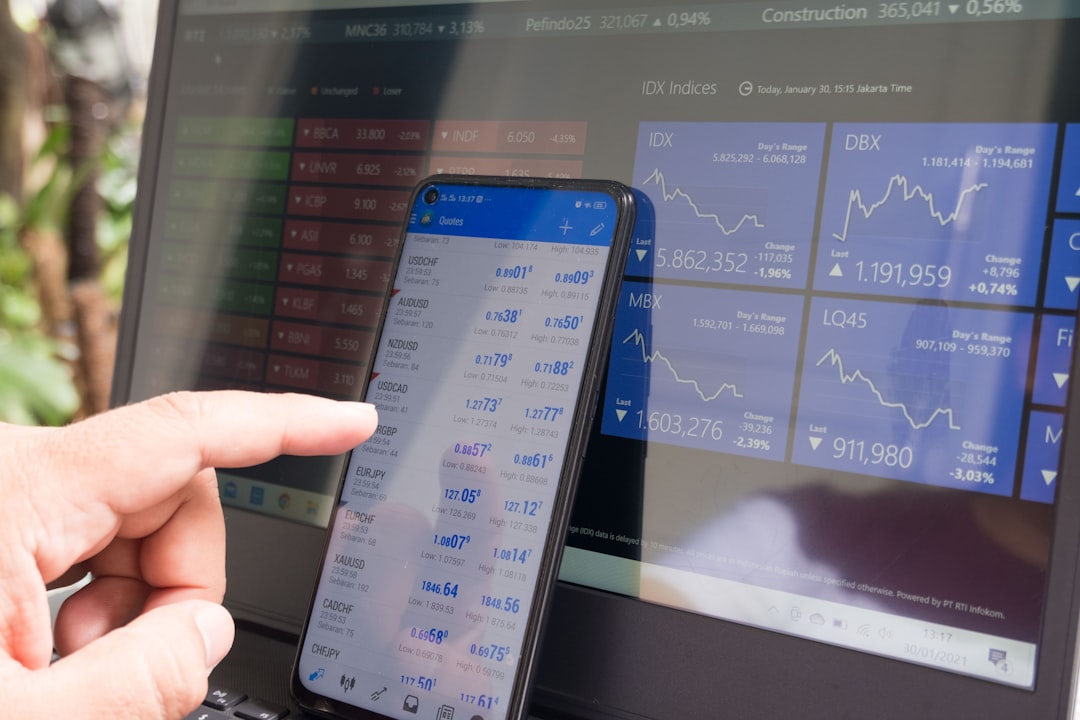
MetaTrader 4 and MT5 power more than 90% of forex trading activity worldwide, and Iranian traders follow this pattern by necessity as much as choice. Yet platform dominance doesn't guarantee effective use—especially when sanctions, payment restrictions, and broker access limitations create obstacles unknown to traders in most other markets. This guide cuts through generic MetaTrader tutorials to address the specific technical and practical challenges Iranian traders face: configuring platforms through VPN connections, selecting brokers that actually accept Iranian clients, automating strategies across difficult time zones, and leveraging community resources when mainstream education remains out of reach. Expect actionable strategies grounded in the financial realities of trading from Iran, not promotional claims divorced from your daily experience.
Why MetaTrader Dominates Among Iranian Forex Traders
MetaTrader's position in the Iranian forex market isn't just dominant—it's nearly absolute. With over 90% of retail traders globally using either MT4 or MT5, Iranian traders have followed this pattern for practical reasons that go beyond simple popularity. The platform's 100+ million downloads worldwide include substantial Middle Eastern adoption, reflecting its functional suitability for markets operating under challenging access conditions.
Platform Accessibility and Broker Compatibility
The primary reason MetaTrader platforms maintain such strong adoption among Iranian traders comes down to broker compatibility. Most offshore brokers willing to accept Iranian clients—particularly those based in jurisdictions like Saint Vincent and the Grenadines, Seychelles, or Vanuatu—offer MetaTrader as their standard platform. This creates a self-reinforcing cycle: Iranian traders choose brokers that accept them, and those brokers almost universally provide MT4 or MT5.
This compatibility extends to the technical infrastructure Iranian traders must use. The platform functions reliably through VPN connections, which most Iranian traders require to access international broker servers. While VPN usage can introduce latency issues that affect execution speeds, MetaTrader's lightweight architecture minimizes these problems compared to browser-based or proprietary platforms that require more bandwidth.
Language and Interface Advantages
Persian language support distinguishes MetaTrader from competing platforms. Both MT4 and MT5 offer complete Farsi interface translations, allowing traders to navigate charts, indicators, and settings in their native language. This accessibility factor proves particularly valuable for newer traders building their skills without the added cognitive load of working in English or Russian.
The platform's support for Expert Advisors provides another practical advantage. Iranian traders can automate strategies to trade during European and American sessions without staying awake through the night. Given Tehran's time zone (GMT+3:30), major forex activity occurs between 1:30 PM and midnight local time, making automation tools especially useful for traders managing positions across multiple sessions.
Selecting MetaTrader-Compatible Brokers for Iranian Clients
Finding a broker that both supports MetaTrader and accepts Iranian clients requires understanding which jurisdictions operate outside traditional banking channels. Most major regulators in the UK, EU, and Australia explicitly prohibit serving Iranian traders due to sanctions compliance, leaving offshore jurisdictions as the primary option.
Jurisdiction Considerations
Brokers registered in St. Vincent and the Grenadines, Seychelles, and Vanuatu consistently accept Iranian clients because these jurisdictions maintain minimal sanctions enforcement and don't participate in international banking restrictions. These offshore regulators prioritize business flexibility over stringent oversight, which creates opportunity but demands careful broker verification.
When evaluating jurisdictions, Iranian traders should prioritize:
- Operational history: Brokers operating for 3+ years in these jurisdictions show greater stability
- Client base transparency: Companies with verifiable Iranian trader communities provide social proof of actual access
- Platform stability: MetaTrader server locations in Europe or Asia reduce latency compared to servers in remote offshore locations
- Withdrawal track record: Online forums and Telegram groups reveal which brokers actually process crypto withdrawals to Iranian traders
Payment Method Requirements
Cryptocurrency deposits have become essential infrastructure for Iranian traders. Approximately 75% now rely on Bitcoin, Tether (USDT), or other cryptocurrencies as their primary funding method. This isn't preference—it's necessity.
The broker must support:
- Direct crypto deposits without third-party payment processors that block Iranian IPs
- Multiple cryptocurrency options (Bitcoin, USDT, Ethereum) to provide flexibility during network congestion
- Reasonable minimum deposits aligned with Iranian purchasing power ($50-100 rather than $500+)
- Matched withdrawal methods allowing crypto-to-crypto transfers without forced bank conversions
Stated policies differ from actual practice. A broker may list cryptocurrency support but route Iranian deposits through compliance checks that result in account freezes. Before depositing significant capital, test with a minimal amount and verify the full deposit-to-withdrawal cycle completes within stated timeframes. Join Iranian trader communities on Telegram where members share current experiences with specific brokers, as access conditions change frequently.
Overcoming Connectivity Challenges: VPN Setup and Best Practices
Approximately 70-80% of Iranian MetaTrader users access their trading platforms through VPNs, making connection stability a critical factor in trade execution quality. A poorly configured VPN can add 200-500 milliseconds of latency, enough to cause slippage on volatile pairs like EUR/USD during major news releases.
The technical reality is straightforward: VPN usage introduces an additional routing step between your device and the broker's server. For scalpers and day traders, this delay can mean the difference between a profitable trade and a loss. However, with proper setup and service selection, Iranian traders can minimize these issues while maintaining necessary access.
Choosing Low-Latency VPN Services
Not all VPN services perform equally for trading purposes. Iranian traders should prioritize these specific criteria when selecting a VPN:
- Server proximity to broker locations — Choose VPN providers with servers in Germany, UK, or Cyprus where most Iranian-friendly brokers host their trading servers
- Protocol optimization — WireGuard and IKEv2 protocols typically offer 30-40% lower latency than older OpenVPN configurations
- Dedicated IP options — Some brokers flag shared VPN IPs as suspicious, potentially freezing accounts during verification
- Split tunneling capability — Route only MetaTrader traffic through the VPN while accessing other internet services directly
- Connection stability metrics — Test providers during both Tehran market hours (9:00-17:00 IRST) and major forex sessions to measure disconnection frequency
Iranian traders report better execution speeds when using VPN servers in Frankfurt or London compared to more distant locations like Singapore or the United States, even when the same broker is used.
Mobile Trading as a Backup Solution
When desktop VPN connections fail during critical trading moments, MetaTrader mobile apps provide essential redundancy. Mobile data connections in Iran often bypass the same restrictions affecting home broadband, allowing direct broker access without VPN overhead in some cases.
Configure your MT4 or MT5 mobile app with the same account credentials and keep it logged in during active trading sessions. Mobile LTE connections typically add 150-250ms latency compared to broadband, but this remains preferable to a dropped desktop connection during position management.
Leveraging Expert Advisors for Automated Trading
Expert Advisors transform how Iranian traders manage the structural disadvantage of trading across time zones. When London markets open at 11:30 AM Tehran time and New York follows at 5:30 PM, manually monitoring these sessions creates scheduling conflicts with work and daily responsibilities. Automated trading systems solve this problem by executing predefined strategies without requiring constant screen time.
Automated trading now accounts for 30-40% of forex volume on MetaTrader platforms globally, and Iranian traders increasingly adopt this approach for practical reasons beyond convenience. VPN-related latency issues, which affect manual order execution, become less critical when EAs handle trade entries and exits based on technical conditions rather than split-second manual decisions. The MQL5 marketplace offers over 10,000 trading robots, though selecting the right EA requires understanding your strategy objectives and risk tolerance.
Selecting Pre-Built Expert Advisors
Pre-built EAs from the MQL5 marketplace provide immediate automation without programming knowledge. Iranian traders should prioritize robots with verified trading results, transparent strategy descriptions, and active developer support. Many free EAs function adequately for testing automation concepts, while premium options typically range from $30 to $300 paid through cryptocurrency-compatible payment channels.
Filter marketplace options by strategy type: trend-following systems work well during directional moves in EUR/USD and GBP/USD, while grid or martingale EAs require larger account balances to withstand drawdown periods. Always backtest downloaded EAs on demo accounts for at least 30 days before risking real capital. Check the EA's settings for compatibility with your broker's spread and commission structure, as algorithms optimized for ECN accounts may underperform on standard accounts.
Learning MQL Programming Basics
Custom EA development using MQL4 or MQL5 reduces dependency on external developers and eliminates recurring subscription costs. Iranian traders with basic programming exposure can learn MQL fundamentals within 4-6 weeks using free resources from the MQL5 community and documentation library.
Starting with simple scripts that automate routine tasks—like closing all positions at a specific time or setting break-even stops—builds practical coding experience. Progressing to full EAs that incorporate indicators like moving averages, RSI, or custom conditions gives complete control over strategy implementation. The MetaEditor environment includes debugging tools and a strategy tester that simulates years of historical data in minutes, allowing rapid refinement of trading logic without financial risk.
Essential MetaTrader Features Iranian Traders Should Master
Given the connectivity challenges and payment restrictions Iranian traders face, mastering specific MetaTrader features becomes critical for consistent trading success. These tools directly address the realities of trading through VPN connections, managing capital constraints from cryptocurrency-only deposits, and operating across time zones.
One-Click Trading and Quick Execution
Connection instability from VPN usage or internet disruptions makes execution speed paramount. One-click trading eliminates the confirmation dialog that appears with standard orders, reducing execution time from 3-4 seconds to under one second. To enable this feature, right-click on any chart and select “One-Click Trading” or press Alt+T.
Iranian traders should configure this feature with these parameters:
- Set default lot sizes based on your cryptocurrency deposit amount (typically 0.01 to 0.10 lots for accounts under $500)
- Position the trading panel on charts monitoring major pairs during London and New York sessions
- Use keyboard shortcuts (F9 for standard order window, F12 for quick buy/sell on some broker platforms) as backup when connection quality degrades
- Disable one-click trading during news events to prevent accidental entries during high volatility
Backtesting and Strategy Validation
Before risking limited capital—particularly when deposits through cryptocurrency involve transaction fees of 2-5%—backtesting validates whether a strategy holds merit. MetaTrader's Strategy Tester (Ctrl+R) allows you to test Expert Advisors or manual strategies against historical price data.
For Iranian traders working during off-peak hours (typically 11:30 PM to 7:30 AM Tehran time for London/New York overlap), backtesting reveals how strategies perform during these specific sessions. Select the date range matching your intended trading hours, choose “Every tick” modeling for accuracy, and run tests across at least 12 months of data. A strategy showing consistent profitability across 1,000+ trades with a maximum drawdown under 20% warrants small live testing with 0.01 lot sizes.
MetaTrader 4 vs MetaTrader 5: Which Platform for Iranian Traders?
Broker availability dictates platform choice for most Iranian traders. While MetaTrader 5 offers superior technical capabilities, MetaTrader 4 remains the practical choice because roughly 70% of brokers accepting Iranian clients only support MT4. This reality stems from sanctions-related restrictions that limit which international brokers will onboard traders from Iran, and these accessible brokers tend to maintain their legacy MT4 infrastructure.
The platform differences matter beyond broker availability. MT5 provides access to 1,000+ instruments spanning stocks, commodities, and futures contracts, whereas MT4 focuses exclusively on forex and CFDs. For Iranian traders seeking portfolio diversification beyond currency pairs, MT5's expanded asset coverage presents clear advantages. The hedging capabilities differ significantly too: MT4 allows hedging (opening buy and sell positions on the same pair simultaneously), which MT5 restricts through its netting system that combines opposing positions.
| Feature | MetaTrader 4 | MetaTrader 5 |
|---|---|---|
| Broker Support for Iranian Traders | High (70%+ of accessible brokers) | Limited (30% of accessible brokers) |
| Available Instruments | Forex pairs, CFDs | Forex, stocks, commodities, futures (1,000+) |
| Hedging | Allowed | Not allowed (netting only) |
| Pending Order Types | 4 types | 6 types (including stop-limit) |
| EA Compatibility | MQL4 language (simpler) | MQL5 language (more powerful, not backward compatible) |
| Economic Calendar | Not integrated | Built-in calendar |
Expert Advisor compatibility presents a critical consideration. MT4 uses MQL4 programming language, while MT5 requires MQL5. Existing EAs cannot transfer between platforms without complete recoding. Iranian traders who rely on automated strategies—particularly valuable given the time zone gap with London and New York sessions—should verify their EA compatibility before switching platforms. The MQL5 marketplace offers more sophisticated tools, but the MQL4 ecosystem remains larger and more accessible for traders without programming expertise.
Accessing Iranian Trading Communities and Educational Resources
Persian-language trading communities have become essential knowledge hubs for Iranian MetaTrader users, particularly as international educational resources remain difficult to access. Telegram channels dedicated to Forex trading attract thousands of Iranian traders who share platform tutorials, broker experiences, and custom indicators tailored to local market conditions. These communities fill critical gaps left by language barriers and restricted access to mainstream trading education platforms.
Finding Reliable Persian-Language Resources
Not all Persian trading communities offer equal value. Established Telegram groups with verified administrators who demonstrate consistent technical knowledge provide the most reliable guidance. Look for channels that share specific MetaTrader customization tutorials, such as adjusting timeframes for Asian and European session overlaps or optimizing Expert Advisors for common cryptocurrency deposit workflows. Communities that openly discuss broker withdrawal experiences—particularly timing and success rates with crypto transfers—offer practical insights unavailable elsewhere.
Forum-based resources complement real-time Telegram discussions by archiving solutions to recurring technical issues. Iranian traders frequently encounter VPN-related latency problems affecting order execution, and community forums document which VPN protocols work best with specific brokers' MetaTrader servers.
Evaluating Broker Recommendations from Community Sources
Community broker recommendations require careful scrutiny. Trustworthy sources provide detailed verification evidence: screenshots of successful withdrawals with transaction IDs visible, specific deposit methods tested (USDT TRC-20 versus Bitcoin), and honest assessments of customer support response times for Iranian clients. Be skeptical of recommendations that avoid discussing sanctions-related limitations or promise unrealistic execution speeds.
Cross-reference broker suggestions across multiple independent communities. If three separate Persian-language groups consistently report positive experiences with the same broker's MetaTrader integration and cryptocurrency processing, the recommendation carries more weight than isolated endorsements. Peer learning through these networks reduces trial-and-error costs and helps identify brokers genuinely committed to serving Iranian traders despite regulatory complexities.
Putting MetaTrader to Work in the Iranian Trading Environment
MetaTrader's effectiveness for Iranian traders ultimately depends on combining platform mastery with practical solutions to access challenges. The technical features—automation through Expert Advisors, mobile trading redundancy, one-click execution, comprehensive backtesting—only deliver value when paired with the infrastructure realities of your trading environment: reliable VPN configurations, brokers that actually process cryptocurrency withdrawals, and community knowledge that reflects current sanctions conditions rather than idealized tutorials.
Success doesn't require implementing every feature simultaneously. Start with one or two capabilities that address your most pressing constraints. If time zone differences prevent monitoring London session opens, focus on backtesting a simple EA and running it on a demo account for 30 days. If VPN latency causes execution problems, prioritize optimizing your connection setup and configuring one-click trading before exploring advanced order types. Build competence incrementally rather than attempting to master the entire platform at once.
The learning curve is real, and the Iranian trading environment adds layers of complexity absent from standard MetaTrader guides. But thousands of Iranian traders navigate these same obstacles daily, sharing solutions through Persian-language communities and adapting as conditions evolve. Your effectiveness with MetaTrader will grow through consistent practice, peer learning, and realistic expectations about both the platform's capabilities and the ongoing adaptation required to trade successfully from Iran.